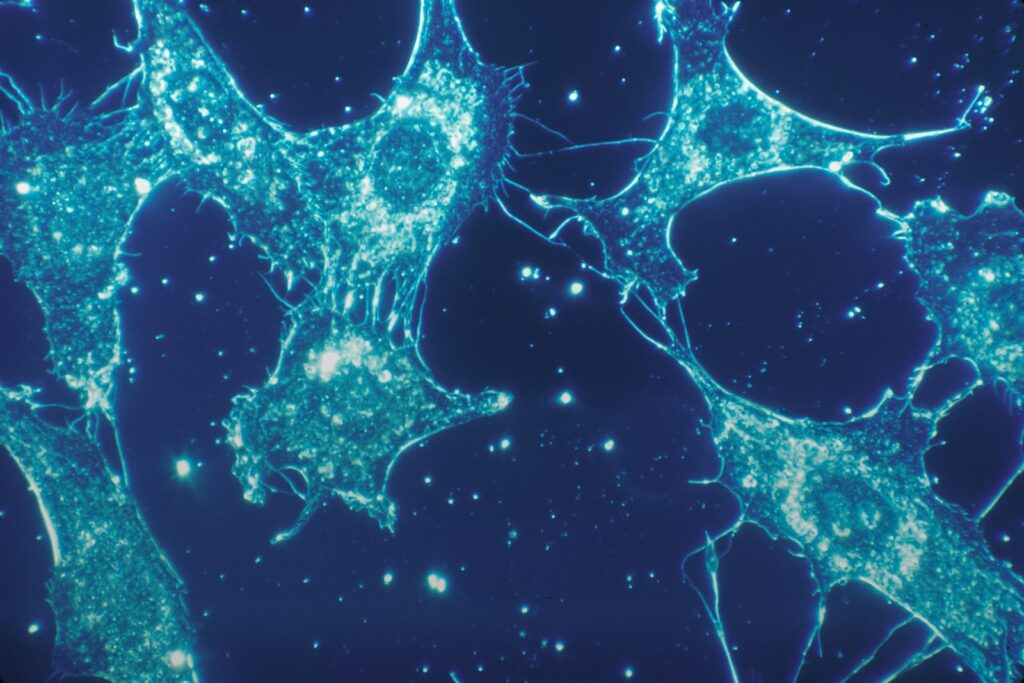
What are mesenchymal stem cells?
Mesenchymal stem cells (MSCs) are adult cells found in tissues such as bone marrow, fat, the umbilical cord and the placenta. They can renew themselves and, in the laboratory, develop into several cell types, including bone, cartilage and fat cells.
Much of today’s research focuses less on MSCs becoming new tissue and more on what they signal: MSCs release proteins, growth factors and vesicles that interact with the immune system and with damaged tissue. This is why they are being studied in orthopedics, inflammatory and autoimmune conditions, aesthetics and other fields.

Why placental tissue?
The cells we use come from donated placental tissue, collected after healthy, full-term births with the mother’s informed consent. This tissue would otherwise be discarded. No embryos are involved.
- No harvesting procedure for you. Unlike bone-marrow or fat-derived cells, there is no extraction from your own body.
- Young cells. Perinatal tissue provides cells that have not aged with the patient.
- Screened donors. Donors and tissue are screened for infectious diseases before processing.
What are exosomes?
Exosomes are microscopic vesicles released by cells, including MSCs. They carry proteins, lipids and genetic material that cells use to communicate. Exosome products contain no living cells; they are being studied as a way to deliver some of the signalling effects of MSCs. We use them on their own (for example after microneedling) or together with cells.
Laboratory and quality
Cells and exosomes are prepared by a specialised laboratory and arrive with batch documentation. Before treatment, the product is checked and its batch number is recorded in your file, so every treatment is traceable.
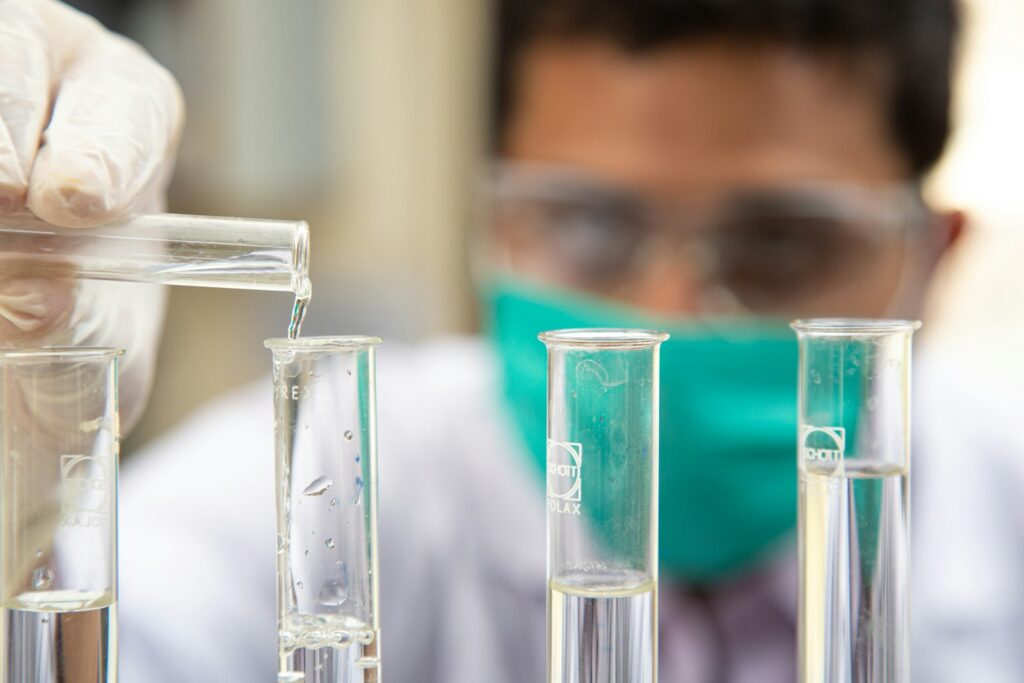
You are welcome to ask your coordinator about the laboratory, product documentation and the clinic’s licensing before you decide.
What the research shows — and doesn’t
MSC therapies are an active area of research worldwide, with many clinical trials in orthopedics, autoimmune and inflammatory conditions and other fields. Some studies report improvements in pain and function; others show limited or no benefit, and many are small or early-stage. Protocols, cell sources and doses differ between studies, which makes comparisons difficult.
In plain terms: regenerative therapy is promising but not proven for most conditions, and results vary between people. We will never tell you that a treatment is a cure, and we encourage you to read independent sources and to discuss the option with your own physician.
Risks
Every medical procedure carries risk. Possible side effects of cell and exosome treatments include:
- Pain, swelling, bruising or stiffness at the injection site
- Temporary flare-up of symptoms
- Fever, headache or fatigue after IV infusions
- Allergic reactions
- Infection (rare)
Long-term effects are still being studied. Treatment may not be suitable if you have active cancer, an active infection, certain blood disorders, or if you are pregnant. Your physician reviews your individual risks with you before you sign an informed-consent form.
Regulatory status
Regulations for cell-based therapies differ by country. In the United States, the stem cell and exosome therapies we offer are not approved by the FDA. In Mexico, health services and cell-based products are overseen by federal health authorities. During your review we explain the regulatory status of the protocol we propose, so that you can decide with full information.